


SoloMate: Dating Now
4.6387.00 Reviews
App Specs
- Version
- 1.7.1
- Updated On
- License
- Free
- Downloads
- 50,000+
- Developer
- Anastassiya Rybina
- Categories
- Entertainment
- Platform
- Android
Screenshots

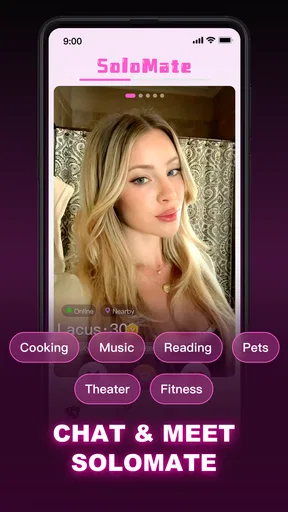
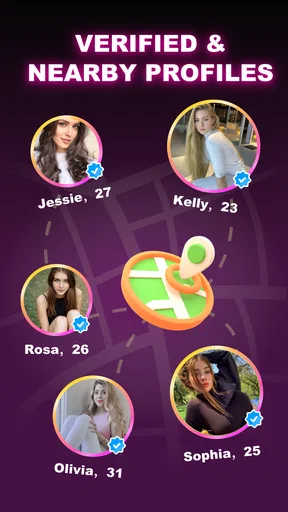

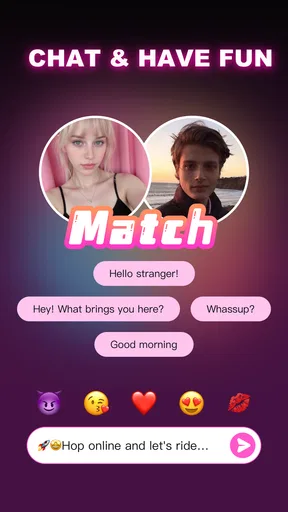
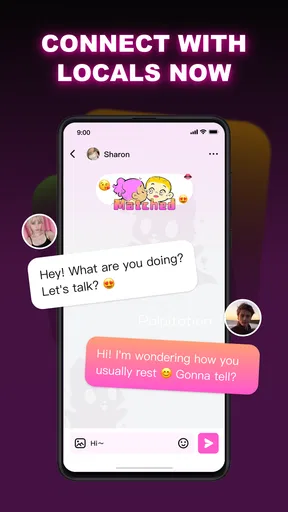
 Analysis by AppCompare
I spent time with SoloMate as an entertainment app built around meeting, chatting with, and getting to know other people. Its purpose is easy to understand: it aims to make the first step toward a relationship, a casual conversation, or a new connection feel less intimidating. That sounds familiar in the dating-app world, but the experience is shaped less by the promise of endless browsing and more by what you do after finding someone interesting.
My first impression was that SoloMate: Dating Now is best viewed as a low-commitment way to explore social and romantic connections rather than as a guaranteed route to a serious relationship. It is free to download, and its public store presence shows a 4.6 average from around 2.6 thousand ratings, with more than 50 thousand installs. Those figures suggest that the app has found an audience, although they should not be treated as a promise that every local area will have the same level of activity.
How SoloMate works as a dating and social app
The app comes from developer Anastassiya Rybina and sits in the entertainment category, but its practical role is closer to a dating and social discovery tool. The central activity is choosing whether someone seems worth talking to, then moving from a quick impression into an actual conversation. That transition is where many dating apps either become useful or start to feel repetitive, and it is also where I think users should set realistic expectations.
SoloMate is not something I would open expecting a carefully managed matchmaking service or a substitute for meeting people through friends. It is more suitable for someone who wants another place to browse potential connections and start conversations at their own pace. The store summary focuses on matching, chatting, and meeting real people, so the app’s appeal is clearly social rather than purely entertainment in the passive sense.
The mature age classification matters here. SoloMate is marked for users aged 17 and above, which places it firmly in an environment where conversations may involve dating, attraction, and adult themes. I would not recommend treating that label as a guarantee that every interaction will be mature or respectful. It is still important to protect personal information, avoid rushing into offline meetings, and stop engaging with anyone who ignores boundaries.
The current version is 1.7.1, and the app supports devices running Android 7.0 or newer. That makes it accessible to people using older Android phones, which is useful if you do not own a recent flagship. At the same time, compatibility alone does not tell you how active the service will feel in your area. Dating apps depend heavily on the number of nearby users, how often they return, and whether those users are looking for the same kind of connection.
The first-use experience and the importance of patience
When I approach an app like this, I try not to judge it solely by the first few profiles or conversations. A dating service can feel empty at one time of day and lively at another, especially outside large cities. SoloMate is therefore the kind of app I would test over several sessions rather than install once, see a limited selection, and immediately decide that it has nothing to offer.
Worth Reading Before You Choose

EA SPORTS FC Mobile 26 Is a Bigger Football Game, but It Takes Time

Flipboard Shows What News Apps Must Do Beyond the Feed

Switching to Android Auto Means Rethinking Your Driving Routine

Google Calendar Makes a Crowded Week Easier to Manage

Ludo King Makes the Most of the Minutes Between Plans

Baby Panda World Brings Quick Play to Modern Phones, but Its Game Library Feels Busy
A practical approach is to use the first session to understand the rhythm of the app instead of trying to force a result. Look at the kind of people appearing, notice whether conversations seem genuine, and pay attention to how much effort is required before you can decide whether someone is worth contacting. This gives you a better sense of whether the service fits your habits than simply counting matches.
One useful habit is to write a profile that gives a potential conversation partner something specific to respond to. A short statement about a hobby, a favorite type of evening, or the reason you joined is more useful than a vague line about wanting to meet people. That is not a special feature of SoloMate, but it matters particularly in an app whose value depends on turning a match into a real exchange rather than leaving it as a silent notification.
What the free starting point really means
SoloMate is free, which makes it easy to try without committing money before you know whether the app suits you. That is the clearest value proposition I can verify: you can begin exploring the service without paying an entry fee. For someone comparing several dating apps, this lowers the risk of testing another option alongside an existing favorite.
There are also in-app purchases ranging from $0.99 to $199.99 per item. That is a very wide range, so I would not assume that paying a small amount gives the same value as choosing one of the more expensive items. The sensible approach is to inspect each purchase screen carefully, understand what the item does, and decide whether it solves a problem you actually have. A free app can still become expensive if you buy impulsively because a conversation feels urgent.
The difference between free access and paid value is especially important in dating apps. Paying may help with convenience or visibility, depending on the item offered, but it cannot create chemistry, guarantee a reply, or make an unsuitable match become suitable. I would only spend money after using the free experience long enough to identify a specific frustration. If you cannot name the problem a purchase will solve, keeping the app free is the better decision.
I also prefer to treat any purchase as a short experiment rather than as an investment in finding a partner. A paid option might make sense for someone who is already receiving promising activity and wants to make the process more efficient. It makes much less sense for a new user who has not yet confirmed that there are enough compatible people nearby. The app’s free access lets you answer that question before spending.
Where the app delivers practical value
The strongest value in SoloMate is flexibility. You can use it as a way to meet people outside your existing social circle, start conversations when you have time, and decide gradually whether a connection deserves more attention. That is useful for people who work unusual hours, have recently moved, or find face-to-face introductions difficult.
Imagine finishing work late and having no interest in going to a crowded venue. You can spend a few minutes looking through the app, respond to someone whose profile gives you a genuine opening, and continue the conversation later instead of trying to arrange an immediate meeting. That does not guarantee a meaningful relationship, but it fits the way many people actually manage social time today.
Another less obvious benefit is that the app can help you clarify what you are looking for. After a handful of conversations, you may notice that you prefer people who communicate directly, share a certain lifestyle, or are interested in something more casual than you first expected. Used thoughtfully, SoloMate becomes a place to learn your own preferences, not just a tool for collecting matches.
The trade-off is that this value depends on your willingness to participate. Browsing without replying, sending identical opening lines, or judging people only from a single photo will make the experience feel shallow. I found that the app makes more sense when I treat each promising profile as an invitation to have one decent conversation, not as a number in a personal success tally.
Conversation quality, boundaries, and meeting safely
Chatting is the point where a dating app becomes more than a catalog of profiles. I recommend moving slowly enough to notice whether the other person asks questions, respects a no, and maintains a consistent tone. A profile may look appealing, but the conversation reveals much more about compatibility. If someone immediately pressures you for private details, money, intimate images, or an offline meeting, that is a reason to disengage rather than negotiate.
For a first meeting, I would choose a public place, tell a trusted person where I am going, and arrange my own way home. I would also avoid sharing my home address, workplace details, financial information, or documents during the early stages of a conversation. These precautions are not a criticism unique to SoloMate; they are necessary whenever an app connects you with people you have not met before.
A useful workflow is to keep early conversations inside the app until the person has shown basic consistency. Moving immediately to another messaging service can feel convenient, but it can also make it harder to step away cleanly if the interaction becomes uncomfortable. If you do move elsewhere, I would avoid linking the conversation to accounts that reveal more personal information than you intend to share.
The mature rating also means I would be cautious about assuming that every user wants the same type of relationship. Be clear about your own expectations without turning the first message into an interview. If you want a serious relationship, say so naturally. If you are only open to casual conversation, do not imply otherwise just to keep someone interested. Clear expectations save time and reduce unnecessary conflict.
The trade-offs compared with familiar alternatives
Compared with meeting people through friends, SoloMate offers more immediate reach but less built-in trust. A friend’s introduction gives you some social context; an app gives you more control over who you contact and when. I would choose SoloMate when convenience and variety matter more than having a shared connection to begin with.
Compared with larger, more established dating platforms, SoloMate may appeal to someone who wants to try a smaller alternative without paying at the outset. The drawback is that a smaller install base can mean fewer relevant profiles in a particular town or age group. The published install figure shows a service with a real audience, but it does not guarantee that your preferred community will be active where you live.
Compared with social networks, SoloMate is more direct about meeting and dating. That can reduce ambiguity because you are less likely to wonder why someone is contacting you. However, the dating focus can also make conversations feel more transactional if users rush toward a match or meeting before establishing genuine interest.
The biggest trade-off is between control and effort. An app gives you the ability to decide whom to approach, but you must also write, filter, verify, and manage conversations yourself. If you want a service that does most of the compatibility work for you, a more structured matchmaking product may be a better fit. If you prefer to make those decisions personally, SoloMate’s straightforward social purpose is more appealing.
Who is likely to get the most from it
I think SoloMate is a good candidate for adults who want a free starting point, are comfortable initiating conversations, and live somewhere with enough potential users to keep discovery interesting. It may also suit someone who has tried the usual dating apps and wants a second environment rather than deleting everything and starting over.
It is especially useful for a person who can judge progress by conversation quality instead of expecting instant romantic results. If you are willing to spend a week or two learning the local activity, improving your profile, and responding selectively, you are more likely to see its practical value. The app rewards patience more than frantic swiping.
I would skip it if you dislike online conversation, need a highly curated matchmaking process, or are unwilling to pay attention to safety and boundaries. It is also not the right choice if you expect the free download to guarantee a certain number of matches or replies. No dating app can manufacture mutual interest, and SoloMate is no exception.
People who are sensitive to in-app purchase pressure should also decide in advance how they will handle optional spending. Because individual purchases can reach a high amount, I would keep purchases disabled unless I had a clear reason to use one. The free entry point is valuable, but it should not be confused with unlimited paid value or a promise that spending will improve personal outcomes.
My verdict on spending time or money here
My overall view is positive but measured. SoloMate gives people a free way to explore dating and social connections, and its purpose is clear enough that you can quickly decide whether it belongs in your routine. The app is most convincing when used as a patient conversation tool, not as a shortcut to romance.
I would download it if I wanted to test another dating community without an upfront cost. I would use the free experience first, keep my personal boundaries firm, and judge it by the quality and consistency of conversations rather than by how quickly a match appears. Only after finding genuine activity would I consider an in-app purchase, and even then I would evaluate the exact item instead of assuming that a higher price means a better result.
My recommendation is to try SoloMate for free, but keep your expectations and spending under control. It can be worthwhile for open-minded users who want another route to meeting people, particularly those who value flexibility over curated matchmaking. I would choose a different option if I needed a larger, more established local pool, stronger relationship-focused filtering, or a service where paid value is easier to understand before purchase.
In short, the app earns a place as a low-risk experiment rather than an automatic replacement for every other dating method. Its free access makes that experiment reasonable, its social focus gives it a clear use case, and its paid range means caution is essential. If you approach it with honest intentions, realistic expectations, and a willingness to leave weak conversations behind, SoloMate can be a useful addition to your search for connection.
Pros
- Simple interface makes browsing profiles quick and easy.
- Location-based discovery helps you meet people nearby.
- Profile customization lets you highlight your interests and personality.
- Push notifications can keep you updated on new activity.
- Suitable for users seeking a focused dating experience.
Cons
- Some features may require a paid subscription or in-app purchases.
- Match quality can vary depending on the number of active local users.
- Limited profile information may make compatibility hard to judge.
- Frequent notifications could feel distracting without careful settings.
- Privacy settings should be reviewed before sharing personal details.
FAQs for SoloMate: Dating Now
What is SoloMate: Dating Now, and how does it work?
SoloMate: Dating Now is designed to help people discover potential romantic connections through user profiles, browsing, and messaging features. After creating an account, you can usually add photos and personal information, set preferences, and review suggested profiles. The exact experience may vary by device, region, and app version, so it is worth checking the available features and permissions before completing registration.
Is SoloMate: Dating Now free to download and use?
The app may be available to download at no initial cost, but some functions can require in-app purchases, a subscription, or virtual credits. Features such as advanced search options, unlimited messaging, profile visibility boosts, or seeing certain interactions may be restricted depending on the plan you choose. Before paying, review the subscription price, renewal terms, and cancellation instructions shown in the app store.
Is SoloMate: Dating Now safe for meeting and chatting with other people?
As with any dating platform, safety depends on both the app’s moderation tools and your personal decisions. Avoid sharing passwords, financial information, private documents, or your exact home address. Be cautious of profiles that quickly request money or push you to another platform. Use blocking and reporting options when available, and arrange first meetings in public places while informing someone you trust.
What information does SoloMate: Dating Now require from users?
Dating apps commonly request details such as an email address or phone number, age, location, photos, and dating preferences. Some permissions may also support notifications, camera access, or location-based matching. Only grant permissions that are necessary for the features you want to use. It is also recommended to read the app’s privacy policy to understand how profile data, messages, and uploaded images may be handled.
Can I delete my SoloMate: Dating Now account and cancel a subscription?
You should be able to manage your account through the app’s settings or support section, although the exact deletion process can differ between Android and iOS. Removing the app does not normally cancel an active subscription, so subscriptions must be canceled through Google Play or the Apple App Store. Before deleting your account, check whether conversations, matches, and profile information will be permanently removed.


